A friend and I were discussing polyandry the other day and trying to figure out why a woman would have multiple husbands. We were having this conversation because one of her adult children is visiting Bhutan where polyandry was once considered to be normal, and that knowledge triggered her curiosity.
We began, of course, from our own experience of husbands and we struggled to understand why anyone would want more than one of them. Then we tried to comprehend polyandry with reference to polygyny, which is when a man has multiple wives. (To clarify, polyandry and polygyny are both types of polygamy.) However, our knowledge is limited mostly to what we have read about the Church of Jesus Christ of Latter-day Saints (LDS church).

Polygyny was not practised by the LDS Church after 1904 but an offshoot group, the Reorganized LDS Church (RLDS), continued the practice. An offshoot of the offshoot group subsequently formed into the Fundamentalist LDS Church (FLDS), the leaders of which have been incarcerated because their polygyny included child brides. It seems that the larger society has been more-or-less willing to turn a blind eye to a man having multiple wives, but drew the line at marriages with underage girls. My friend and I thought that this polygyny was primarily about giving men power and control over women, even though some sister wives seemed to quite like the arrangement.
This male-dominant perception of marriage has been around for centuries to the extent that I remembered a time in my life when I needed my father’s or husband’s authorization to open a bank account. I mused that perhaps all this evolved from royalty and aristocracy who wanted to keep land ownership within the family, and inheritance passed through males. Laws have changed a lot in our lifetimes, and inheritance no longer favours the first-born son, but issues around gender-biased power and control still linger.
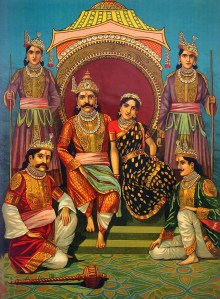
Anyway, neither of us could understand why, in the past, a society would practise polyandry. We wondered if it was because men died younger than women, were more likely to be killed or injured at work, might end up in jail, or might just choose to leave. Admittedly, we were looking through a modern-day lens, but even so we thought some of those same issues might have had historic parallels.
It would make sense for a woman to have a plan B husband as insurance in the event that husband A was absent for any reason. In that event, she would continue to need the skills, income, companionship, sexuality, strength, and wisdom of a male partner. If husband B was already a part of the household, the transition would be relatively easy.
Then we wondered how many countries or cultures had a history of polyandry. Was Bhutan the only one or were there others? We didn’t know, so we had another glass of wine and changed the subject.

The next day I did a quick Wikipedia search and was surprised to find there are at least eight societies that accommodate polyandry. I also learned that there are several different types of polyandry.
• Fraternal polyandry is when a woman is married to two or more men who are brothers. This ensures that the family property (usually land) stays within the family.
• Successional polyandry is when a woman acquires one husband after another in sequence. All husbands are equal in status and share the paternity of any children she may bear.
• Associated polyandry is when a woman may be married to more than one man and each man may have more than one wife. This sometimes serves to form connections between tribes.

Historians have found there to have been known cases of polyandry in Africa, Asia, Europe, North America, Oceania, and South America. So, pretty much everywhere. Most religions have forbidden it with the notable exception of Hinduism which seems, historically, to have had a much more open attitude to it.
I still don’t know why some societies accept the concept of a woman having multiple husbands and others do not, but I think I can guess why it might make sense. It could make family life much easier to manage and it might possibly make the family more wealthy. If it is the woman’s choice, then an extra husband or two would be like having life insurance, but would they be term insurance or whole life insurance? Either way, it’s nice to have something in the bank.
 Snowbird of Paradise
I think I read somewhere it had to do with fertility where fertility was known to be a problem. If a woman was known to be fertile, she could have multiple husbands.
I hadn’t thought of that, but it would be an explanation.