Work began on the Morden Colliery mine shafts in 1912, and during a year-long strike the 22.7 metre (74.5 ft) concrete headframe was built. After dealing with the results of flooding, and after readying the mine, production began in 1917.
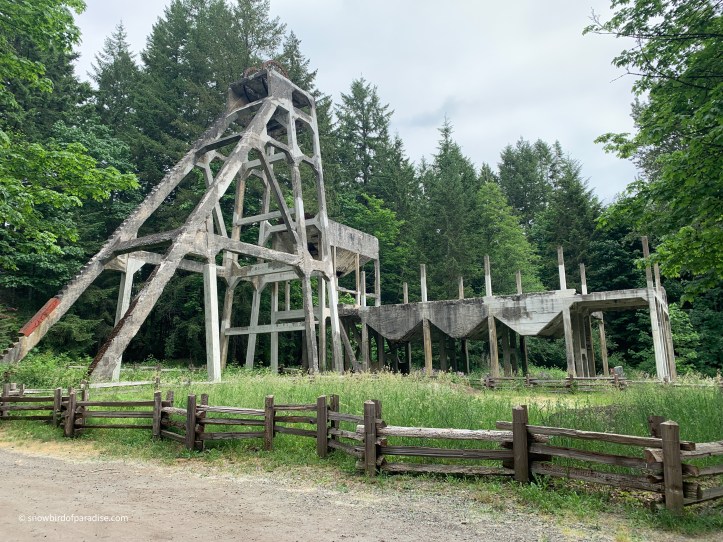


As you may be able to imagine from these pictures, one-ton buckets were pulled up from the mine by a bull chain, and the coal dumped into a tipple. From there, the coal went down a chute to a railway car.
The route of the railway from the mine to the river is now a hiking trail and we followed its 1 km path to see where the coal would have been loaded into the holds of vessels. Some of the rail tracks are still visible at the side of the trail.

In 1921 the pit closed and the Pacific Coast Coalmining Company went bankrupt. In 1972 the area was recognized as a National Historic Site, and in 2003 the Friends of Morden Colliery organized to save the headframe. In 2019 the group received a grant from the British Columbia government to coordinate its restoration. It is one of only two structures like this in North America. (Wikipedia)


 Snowbird of Paradise
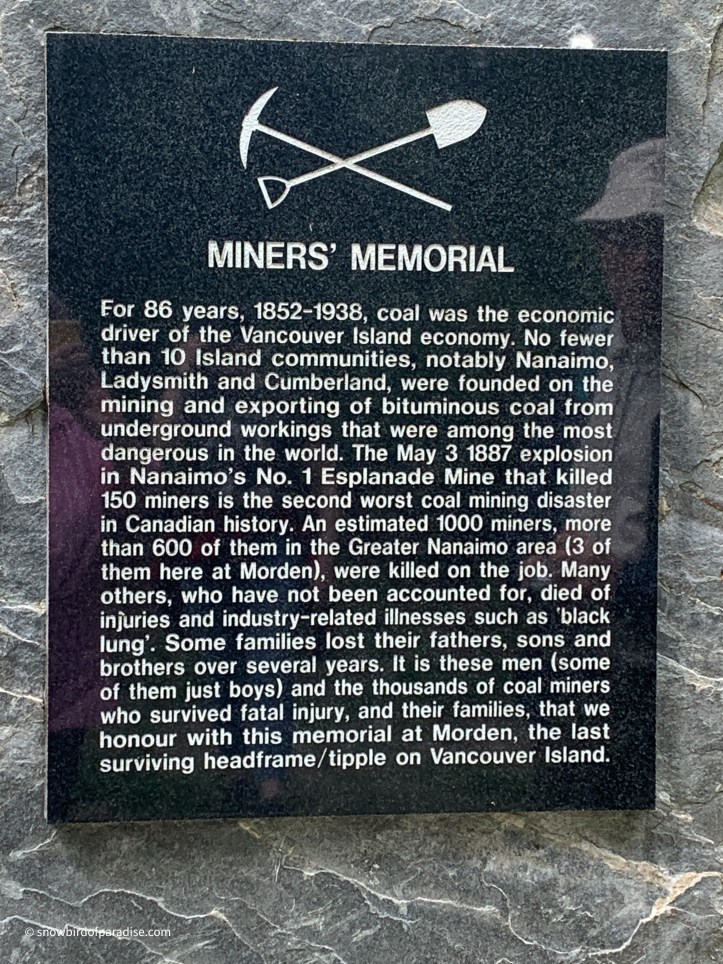
A sad story.
I was struck by how much work went into the colliery for so little benefit.